



- June 4, 2026
Reducing Feed Costs with adaptive grazing systems: A more profitable way to manage Livestock
Why Feed costs stay high in conventional grazing Systems
In many traditional grazing systems, pastures are grazed continuously or rotated on a fixed schedule that does not always account for plant recovery or seasonal variation. This can lead to:
– Overgrazed pastures with reduced regrowth
– Lower forage quality and quantity over time
– Increased reliance on hay and supplemental feed
– Shortened grazing seasons
– Greater vulnerability during drought or dry periods

How Adaptive Grazing Systems reduce feed costs
Adaptive grazing systems focus on managing livestock movement based on real-time pasture conditions rather than fixed calendars. This allows plants adequate recovery time and encourages deeper root systems and more productive regrowth.
When properly managed, this approach can increase usable forage production and reduce dependency on stored feed.
1. Better Utilization of Available Forage
Instead of allowing livestock to selectively graze and repeatedly target preferred species, adaptive grazing encourages more uniform forage use. This helps prevent patch degradation and improves overall pasture efficiency.
2. Improved Pasture Recovery and Regrowth
Rest periods are adjusted based on plant recovery rather than a predetermined schedule. Healthy regrowth leads to:
– Increased forage yield per acre
– More consistent pasture quality
– Longer grazing seasons
3. Reduced Need For Purchased Feed
As pasture productivity improves, many producers are able to reduce:
– Hay purchases
– Supplemental protein or energy feeds
– Emergency feed during dry periods
Even small reductions in feed dependency can significantly improve margins over time.
4. Extended Grazing Seasons
By managing recovery and grazing intensity more effectively, producers often gain additional grazing days in both spring and fall. Extending the grazing season is one of the most direct ways to reduce annual feed costs.
Soil Health As The Hidden Profit Driver
One of the most overlooked aspects of profitability in grazing systems is soil health.
Healthy soils support:
– Higher water infiltration and retention
– More resilient forage growth during dry periods
– Increased nutrient cycling
– Stronger plant root systems
As soil organic matter improves, the land becomes more efficient at capturing and holding moisture, which helps stabilize forage production even under stress conditions. (Adaptive multi-paddock grazing improves water infiltration in Canadian grassland soils)
In practical terms, better soil health often translates into more consistent pasture performance and less need for external feed inputs.

Improving Profitability Through Grazing Management
Profitability in livestock systems is not just about reducing expenses—it is also about increasing the productivity of existing resources.
Adaptive grazing systems support both sides of the equation by:
– Increasing forage production per acre
– Improving livestock performance through higher-quality grazing
– Reducing long-term input costs
– Enhancing land resilience against drought and weather variability
Many producers find that the most significant financial gains come not from cutting herd size or cutting corners, but from improving how grazing is managed across the entire system.
Building A More Resilient And Profitable Farming System
As input costs continue to rise and weather patterns become less predictable, resilience is becoming a key part of long-term farm planning. Systems that depend heavily on purchased feed are often more vulnerable to market swings and drought conditions.
In contrast, resilient farming systems built around adaptive grazing tend to:
– Rely more on internal forage production
– Recover faster after stress events
– Maintain more stable long-term profitability
This shift does not happen overnight, but incremental improvements in grazing management can compound significantly over time.
Learn More About Adaptive Grazing Systems
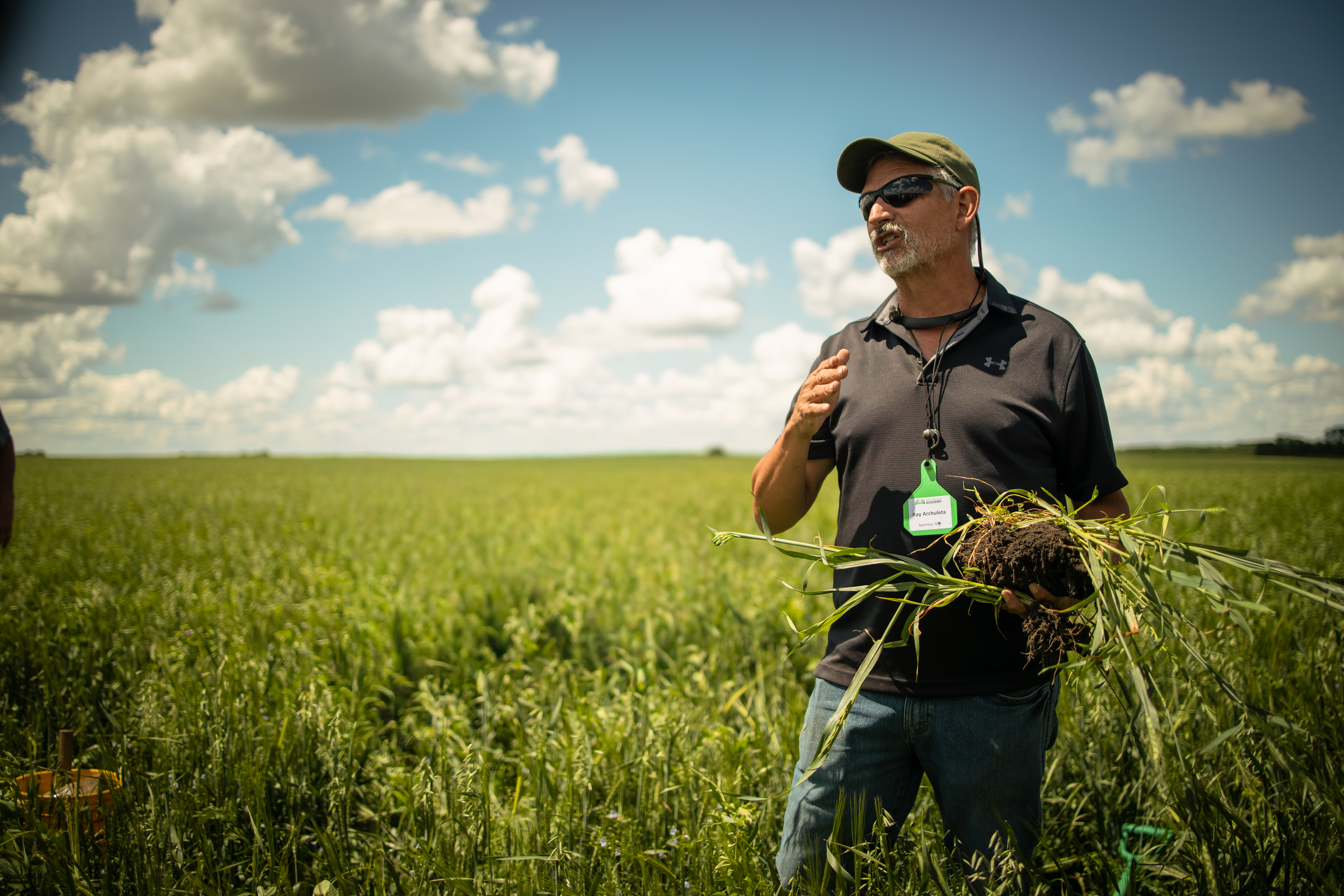
For producers interested in improving profitability while building healthier land systems, Soil Health Academy offers education and hands-on learning focused on adaptive grazing and regenerative land management.
You can learn more about the upcoming training event here:
Adaptive Grazing for Resilient Farms & Landscapes
This program is designed to help farmers and ranchers better understand how grazing management decisions impact soil health, forage availability, and long-term profitability—all while building systems that are more resilient under real-world conditions.

Sources:
“Cattle & Beef.” Economic Research Service, U.S. Department of Agriculture, Jan 8, 2025. https://www.ers.usda.gov/topics/animal-products/cattle-beef.
Garcia, Matthew, et. al. “Evaluating Alternative Feed Sources During Drought.” Utah State University Extension, Utah State University, Oct 2021. https://extension.usu.edu/animalhealth/advisories/evaluating-alternative-feed-sources-during-drought
Döbert, Timm F., et al. “Adaptive Multi-Paddock Grazing Improves Water Infiltration in Canadian Grassland Soils.” Geoderma, Science Direct, vol. 401, 1 Nov. 2021, 115314. https://www.sciencedirect.com/science/article/abs/pii/S0016706121003943