


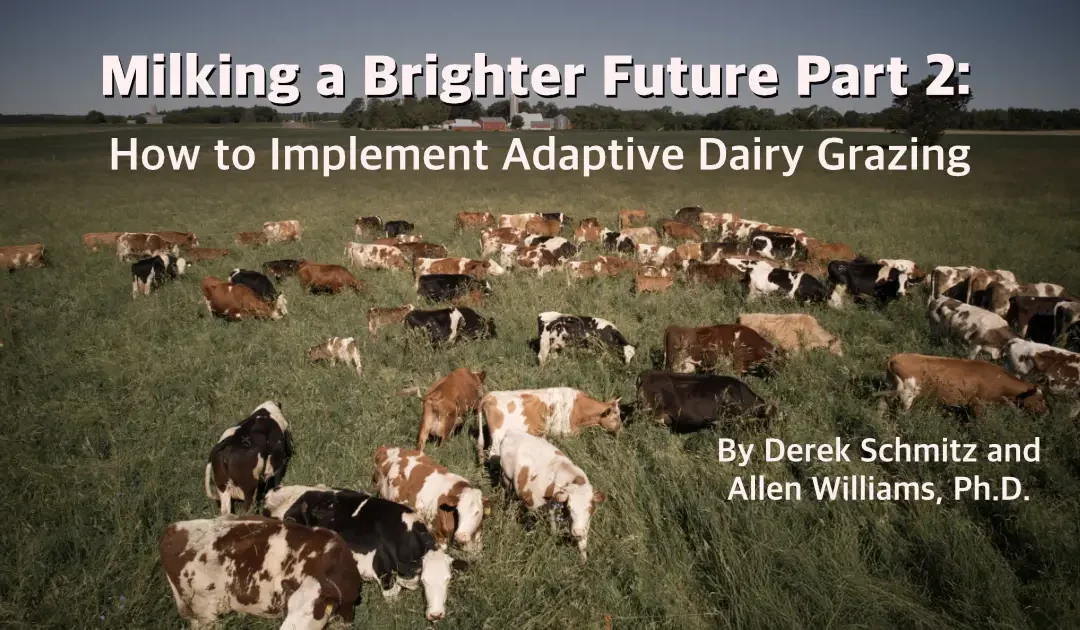
Adapting to Nature: The Power of Adaptive Grazing
Adaptive grazing is more than just a grazing strategy — it’s a mindset shift that helps farmers work with nature, not against it. Unlike rigid, prescriptive systems, adaptive grazing allows producers to continually adjust to real-life conditions on their land.
Across Minnesota and the U.S., this approach has proven to be one of the most effective methods for improving soil organic matter (SOM), biodiversity, and forage production — all while increasing net profitability.
By following the Three Rules of Adaptive Stewardship — Compounding, Diversity, and Disruption — producers are discovering how intentional management can unlock new levels of productivity and resilience.
Why Traditional Grazing Limits Progress
Many dairy producers unknowingly use a prescriptive approach that limits their operation’s potential. When pastures are grazed on short rotations, plant species diversity declines, soil microbes suffer, and nutrient cycling weakens. The result? Poorer forage quality, reduced milk performance, and limited grazing seasons.
For decades, farmers have been told to:
- “Graze every 20–25 days to keep plants vegetative.”
- “Maintain 30% legumes for nitrogen.”
- “Clip seed heads several times a year.”
While well-intentioned, these practices often do more harm than good. Regenerative dairies across Minnesota and the U.S. are proving that longer rest periods and adaptive flexibility produce healthier soil, stronger forages, and more profitable herds.
Getting Started with Longer Rest Periods
The quickest way to improve soil health is through well-managed, highly diverse perennial pastures. Frequent grazing and minimal post-graze cover waste valuable resources — or, as Derek Schmitz of Cold Spring, Minnesota, puts it, they “squander” potential.
By extending rest periods, plants develop deeper root systems and stronger mycorrhizal connections, creating forages rich in phytonutrients that boost cow health and milk quality.
Derek’s farm has seen impressive results:
-
High Brix forages (double digits into December) — even in central Minnesota’s cold winters.
-
Improved soil aggregation, leading to broader-leaf forages and better palatability.
-
Year-round resilience, with stockpiled forage maintaining quality well into winter.
As Derek’s mentor says, “We are in the hospitality business. Our guests are the biology living in and on our soil. It’s our job to make them feel at home.”
Building Resilient and Diverse Pastures
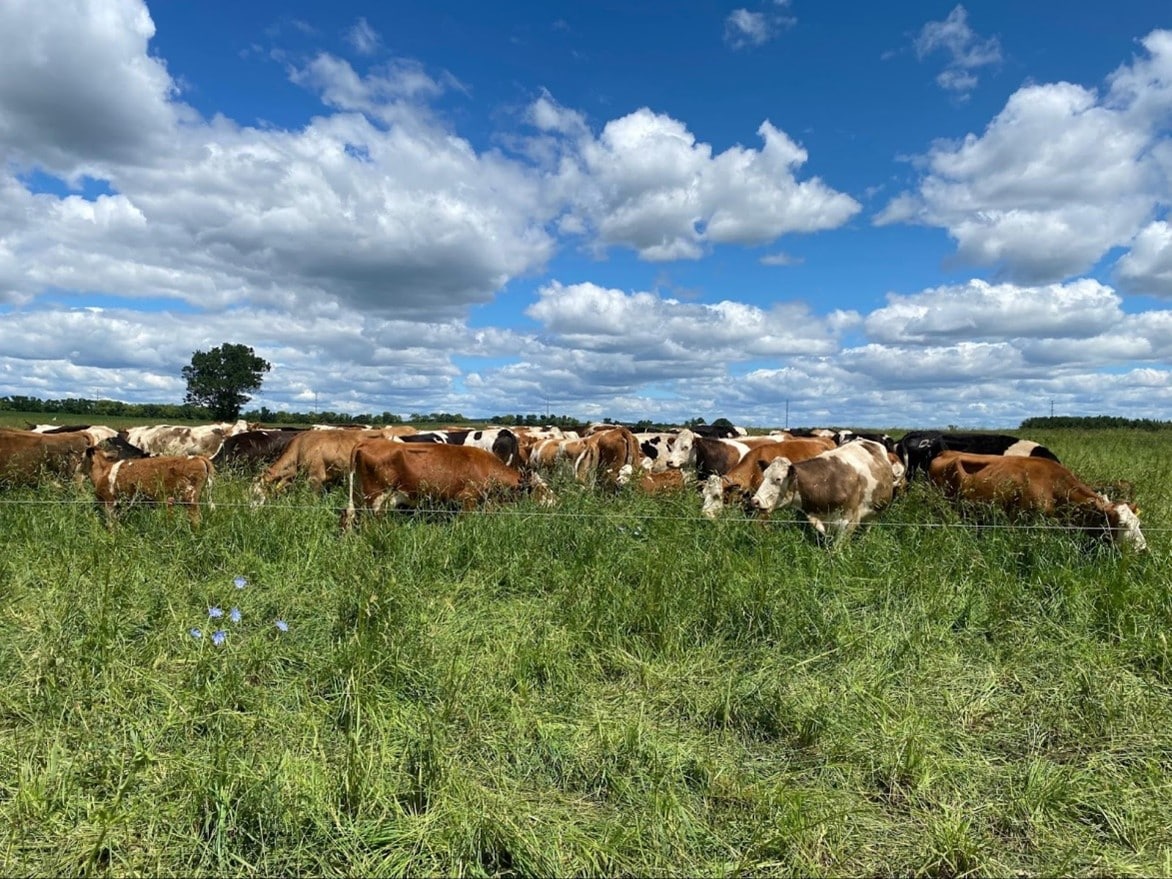
To make longer rest periods successful, pastures must include a wide variety of grasses, legumes, and forbs. Diversity feeds the soil and supports animal health — but it takes time to build.
Practical Steps for Transitioning
-
Grazing less biomass per pass: Instead of removing 50% of forage, take only about 30%. This improves diet balance and encourages regrowth.
-
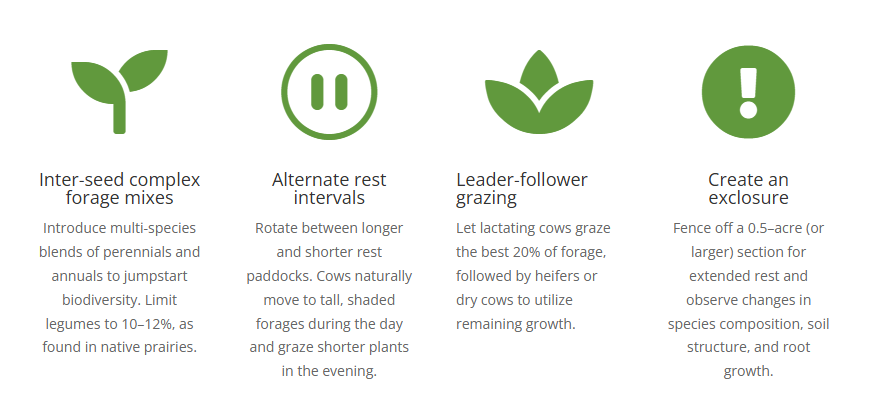
Gradually extend rest periods: Move from 30-day rotations toward 60+ days by skipping select paddocks or varying recovery times.
-
Avoid rigid schedules: True adaptive grazing means adjusting to rainfall, growth rates, and animal needs — not following a calendar.
At Schmitz’s Minnesota dairy, rest periods now range from 40–80 days, with some paddocks given full-season rest. The results include improved plant diversity, deeper root systems, and healthier cows — all contributing to greater long-term sustainability.
Managing Stock Density for Soil and Forage Health
Higher stock densities — sometimes over 250,000 pounds per acre — encourage trample, even grazing, and faster organic matter buildup. Schmitz uses both manual moves and solar-powered fence lifters to rotate cows 3–8 times daily in narrow rectangular paddocks, maximizing efficiency and soil protection.
In one Minnesota field given a 90-day rest, Derek discovered 10 new native species, including warm-season grasses that had not been seen before. The field’s density and vitality improved dramatically after grazing resumed.
The Takeaway: Try Adaptive Grazing
Adaptive grazing isn’t complicated — it’s a return to observing and responding to nature’s cues. Start small, track your results, and remain flexible. Whether you farm in Minnesota or anywhere across the U.S., regenerative dairying offers a path to healthier soils, stronger livestock, and long-term profitability.
Your neighbors might think you’re crazy at first, but when your pastures stay green longer, your cows stay healthier, and your inputs go down — they’ll start asking how you did it.