img

Soil Health Academy

Soil Health Academy

Case Studies

Image
Image
SHA Case Studies

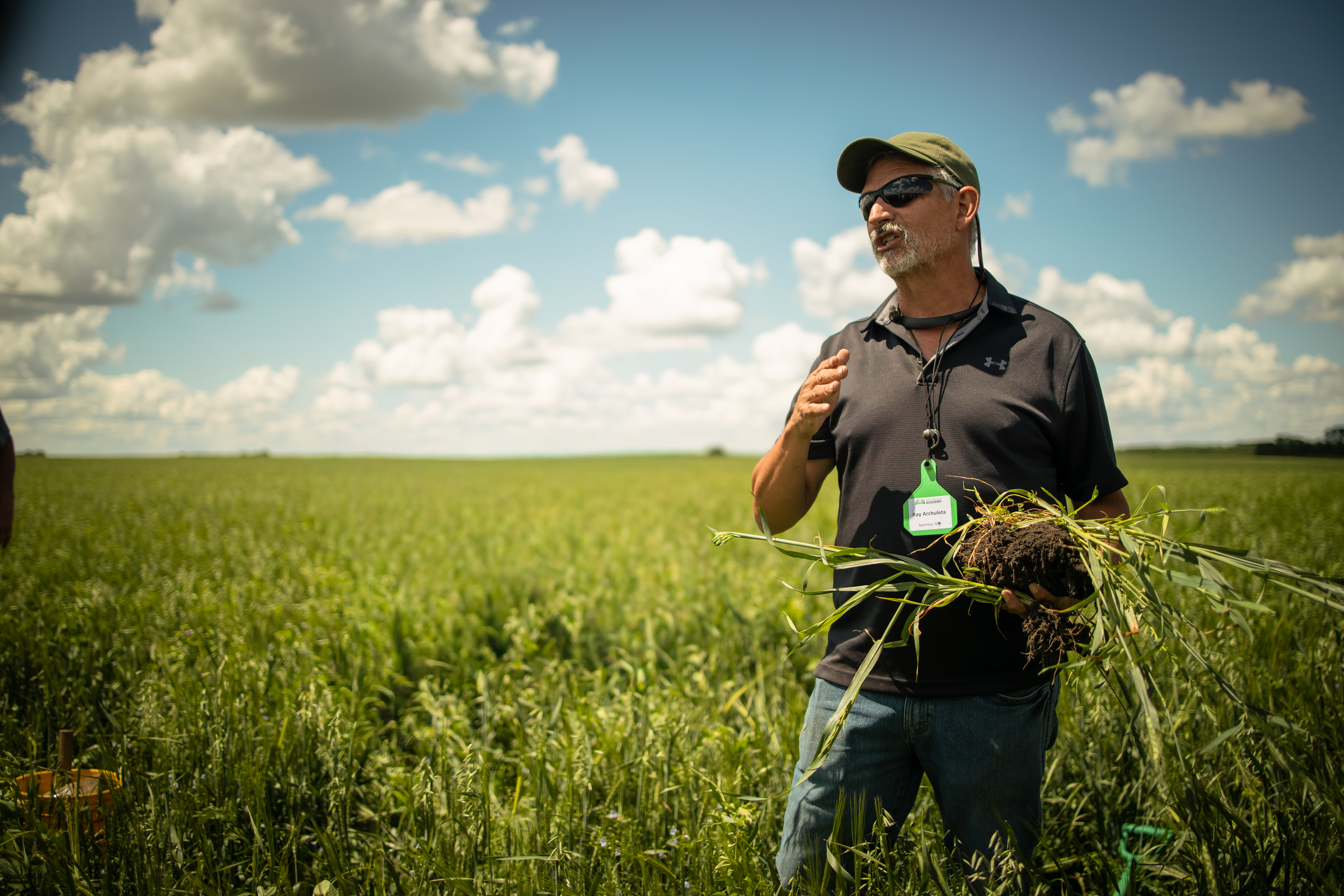
In the detailed case studies posted here, you’ll learn how farmers and ranchers are successfully implementing soil health-focused regenerative agricultural practices in their operations. You’ll also learn more about the resulting positive impacts on their farms’ food, animals, profits and futures.


Each week, for a total of 10 weeks, the Soil Health Academy will add a new case study to this page. We’re grateful to the farm families featured in these studies for sharing their stories and for providing details regarding key production and financial data associated with their respective operations.

Funding for these regenerative agriculture case studies was provided by a generous grant from the Wells Fargo Foundation

Unruh Walnut Farms

Colusa County, California

Daniel and Rachelle Unruh run an 11,235-tree Chandler walnut orchard in Colusa County, CA. After nematode damage and chemical treatments failed, Daniel adopted regenerative practices: cover crops (mustard cut nematodes 40%), reduced synthetic nitrogen, biological pest control, and sheep grazing. Input costs dropped from $741 to $375/acre while soil organic matter rose from 1.7% to 3%+, boosting net profitability despite lower yields.

Stemple Creek Ranch

Stemple Creek Ranch

Marin County, California

Loren and Lisa Poncia run Stemple Creek Ranch, a 4th-generation, 6,000-acre Marin County operation raising grass-fed beef, lamb, pork, and poultry. After leaving corporate sales jobs, they adopted adaptive/pulse grazing, cover cropping, and compost application, growing sales from $1M to $8M by 2022. They sequester 1,000-3,000 lbs carbon/acre annually and host agritourism events.

Dark Branch Farm

Kenansville, North Carolina

Adam Grady’s Dark Branch Farms in Kenansville, NC, has grown into a diversified regenerative operation since 2016: row crops with cover crops, a cover crop seed enterprise, market garden (strawberries, vegetables), pastured pork and poultry. He downsized from 1,100 to 1,000 acres, focusing on net profit over yield, using creative tarp/cover-crop methods to avoid fumigation while satisfying nursery requirements.
Hemme Dairy and Creamery

Sweet Springs, Missouri

The Hemme family (David and sons Jon, Nathan, Michael) runs a diversified dairy operation in Sweet Springs, MO: 1,300 acres, 150 lactating cows, on-farm creamery (since 2016), plus beef and hog enterprises. Jon transitioned from conventional to regenerative row cropping and adaptive grazing after discovering Gabe Brown, boosting corn yields, cutting input costs by $83-102/acre, and raising SOM from 2% to 4%+.

Stoney Creek Farm

Stoney Creek Farm

Redwood Falls, Minnesota

Grant and Dawn Breitkreutz run Stoney Creek Farm near Redwood Falls, MN—1,677 acres of row crops, pasture, and livestock (beef, hogs, eggs, broilers). After near-quitting in 2010 amid financial struggles and livestock health issues from GMO/chemical farming, they shifted to no-till, cover crops, and adaptive grazing, boosting SOM from 2.6% to 5.0% and quadrupling pasture carrying capacity.

Bock Family Farm

Minot, North Dakota

Brandon and Jessie Bock farm 4,800 acres near Minot, ND. After 15 years of high-input conventional farming degraded their soil (severe cracking yet no water infiltration), a 2018 Gabe Brown video sparked their shift to no-till, diverse cover crops, and reduced chemicals. They cut fertilizer 50-60% and insecticide/fungicide use 50%, growing from 3 to 8 crop types while improving water infiltration and soil biology.

Brandt Farm

Carroll, Ohio

David Brandt, a regenerative agriculture pioneer, has farmed 736 acres near Carroll, Ohio since 1971, going 100% no-till that year and pioneering multi-species cover crops after meeting Gabe Brown in 2002. Soil organic matter rose from 0.75% to 8.7%; nitrogen use dropped from 250 to 20-90 lbs/acre. Corn costs $202/acre vs. the regional $450-475, with no fungicides, insecticides, or crop insurance needed.

Wilson Land and Cattle Company

Tionesta, Pennsylvania

Russ and Lennie Wilson run Wilson Land and Cattle Company on just 224 acres near Tionesta, PA, diversifying into cattle, sheep, hogs, poultry, donkeys, honeybees, timber, and native seed sales. Facing financial collapse in 2010-11, Russ adopted daily rotational grazing, boosting grazing days from 120 to 324+ annually and doubling herd size while cutting diesel use 94%. SOM rose from 2.5% to 4.5%, and the farm now fully supports the family.

Seven Sons

Seven Sons

Roanoke, Indiana

Seven Sons, LLC in Roanoke, IN is run by Lee and Beth Hitzfield’s seven sons. After Lee’s wife’s health crisis in the 1990s sparked a focus on nutrient-dense food, they abandoned confinement hog and row-crop farming for regenerative, pastured livestock (beef, pork, eggs, poultry, sheep). They built a direct-to-consumer brand with $70M+ processed through their GrazeCart software platform, now serving 450+ farms nationwide.

Schmitz Dairy

Schmitz Dairy

Cold Spring, Minnesota

Derek and Taylor Schmitz operate a 200-acre grass-based dairy near Cold Spring, MN, milking 70 cows on 100% pasture with no cropland. After years of financial struggle (culling herds, near-broke on high-input TMR), they shifted to low-input grazing, once-a-day milking, and nanny-cow calf raising. Production dropped from 80 to 30 lbs/cow/day, but costs fell 75%, vet costs dropped 90%, and they finally turned profitable.