



- April 9, 2026
Natural Ways to Increase Crop Yields Without Spending More Money
How to Improve Crop Yield
For many farmers and ranchers, the question isn’t just how to grow more—it’s how to do it without increasing costs. With rising input prices and tighter margins, profitability often feels just out of reach.
But what if the answer isn’t adding more, but working with what you already have?
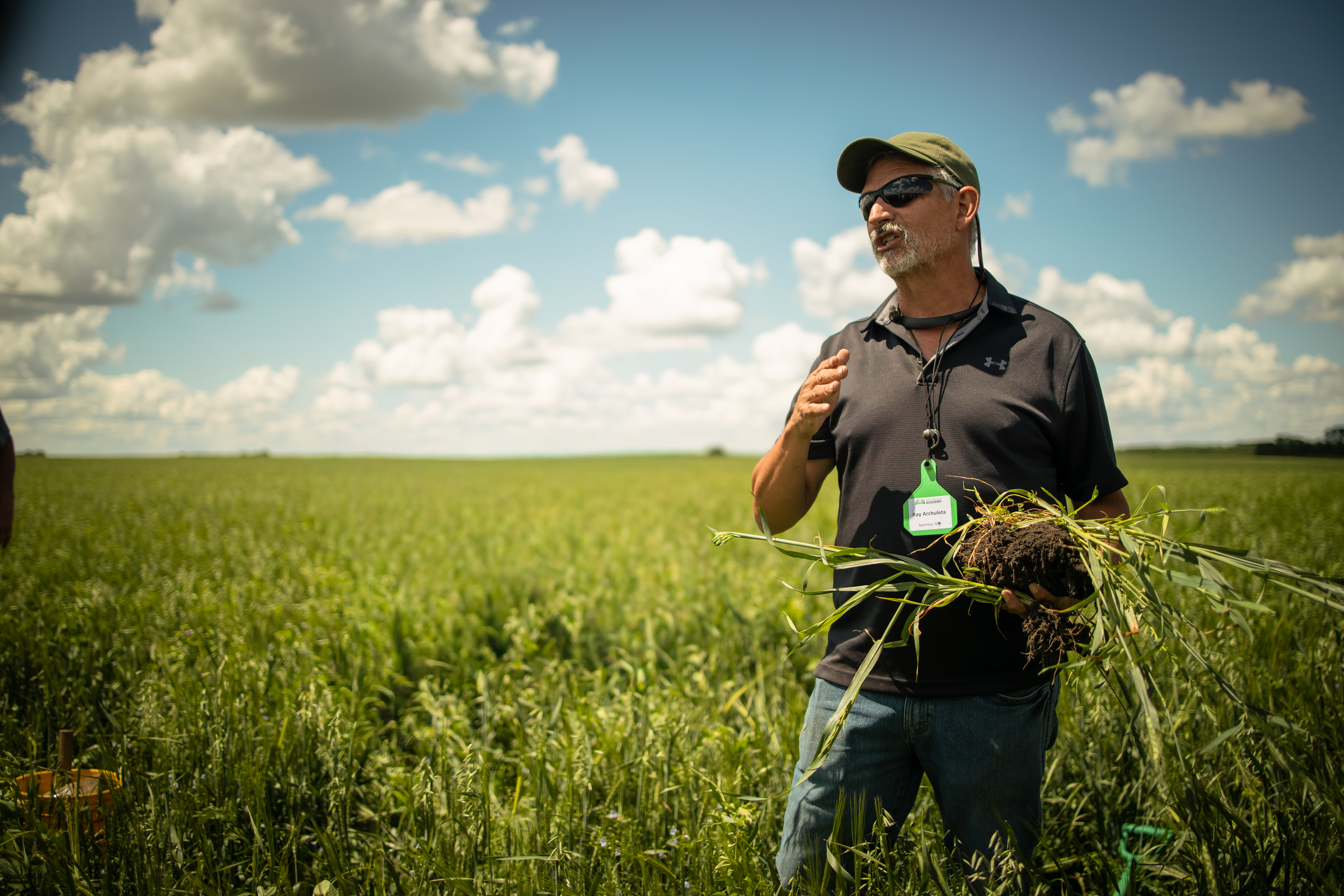
Regenerative agriculture offers a chance to understand how nature functions and apply those principles to your land. By focusing on soil health, biology, and ecosystem balance, farmers can increase crop yield while reducing reliance on expensive inputs. (Profit per Acre, Over Production per Acre)
Natural Farming Methods: Start with the Soil, Not the Seed
How do farmers help plants grow? You’ll find the answer underground.
Healthy soil is a living ecosystem. Billions of microorganisms work together to cycle nutrients, improve soil structure, and support plant health. When that system is functioning properly, crops gain access to everything they need without synthetic fertilizers.
At Soil Health Academy, we are passionate about cultivating healthy soil whenever and wherever possible. If you want to learn how to cultivate healthier soil, explore our upcoming academies. These hands-on events will give you the experience you need to implement regenerative practices on your own land.
Agricultural practices that increase crop yields:
- Reducing or eliminating tillage to protect soil structure (Break the Tillage Habit to Increase Soil Health on Your Ranch)
- Keeping soil covered with residue or cover crops
- Maintaining living roots in the ground as long as possible
- Increasing plant diversity
These natural farming methods rebuild soil organic matter over time. In turn, there will be improved water retention and nutrient availability, which are two of the biggest drivers of yield.

Let Biology Do the Heavy Lifting
Many conventional agricultural practices that increase crop yields rely heavily on external inputs. Regenerative systems shift that burden back onto biology.
When soil microbes thrive, they form relationships with plant roots, trading nutrients for sugars produced through photosynthesis. This natural exchange reduces the need for synthetic fertilizers and improves plant resilience.
In other words, instead of feeding the plant directly, you feed the system that feeds the plant.
Improve Water Efficiency
Water is often the limiting factor in crop production. Healthier soils hold more water and make better use of every inch of rainfall.
Fields managed with regenerative practices:
- Absorb water more effectively
- Reduce runoff and erosion
- Maintain moisture during dry periods
That means crops experience less stress, leading to more consistent and often higher yields, even in challenging conditions. (Assessing Drought Resistance in Soils Managed with Regenerative Organic Practices)

Increase Diversity Above and Below Ground
Monoculture systems can limit both soil health and yield potential over time. Introducing diversity through crop rotations or cover crop mixes creates a more balanced ecosystem.
Diverse plant systems:
- Support a wider range of beneficial microbes
- Break pest and disease cycles
- Improve nutrient cycling
This is one of the most overlooked agricultural practices that increase crop yields without increasing cost. It leverages natural systems instead of replacing them. (Integrating Regenerative Agriculture: Effects on Soil Arthropod Biodiversity and Soil Organic Matter Dynamic)
Reduce Input Dependency Over Time
One of the most powerful outcomes of regenerative agriculture is the gradual reduction in input costs.
As soil health improves, many farmers report:
- Lower fertilizer requirements
- Reduced need for herbicides and pesticides
- Improved crop performance with fewer interventions
This doesn’t happen overnight, but with consistency, the system becomes more self-sustaining.

Focus on Profit, Not Just Production
It’s easy to chase higher yields by adding more inputs. However, that doesn’t always lead to better profitability.
Regenerative farmers often find that even modest yield increases (combined with lower costs) result in stronger margins and more resilient operations.
The question we should be asking is: How can we increase crop yield while improving the health of our land?
To learn how to put this into practice, attend one of our in-person academies or contact us for more information!
Soil Health Academy: Supporting Regenerative Agriculture
Natural farming methods are inspired by the way ecosystems have functioned for generations. Our job is to apply that understanding in modern agriculture.
By working with nature instead of against it, farmers can build healthier soils, grow more resilient crops, and improve profitability without spending more money. Our mission at Soil Health Academy is to empower farmers to be able to accomplish this. If you’d like to support us, click below.
Healthy soil isn’t just good for the farm. It’s good for the future.

Sources:
Prairie, Aaron M., Steven Rosenzweig, Jonathan G. Lundgren, Michael M. Bredeson, Kelton D. Welch, Daniel A. Kane, and M. Francesca Cotrufo. “Integrating Regenerative Agriculture: Effects on Soil Arthropod Biodiversity and Soil Organic Matter Dynamics.” Soil and Tillage Research, vol. 256, Feb. 2026, article no. 106896, 6 Oct. 2025, https://doi.org/10.1016/j.still.2025.106896.
Rodale Institute. “Assessing Drought Resistance in Soils Managed with Regenerative Organic Practices.” Rodale Institute, 21 Dec. 2018. https://rodaleinstitute.org/science/articles/assessing-drought-resistance-in-soils-managed-with-regenerative-organic-practices/
Rohla, Charles. Profit per Acre, Over Production per Acre. Noble Research Institute, Dec. 2025. https://www.noble.org/regenerative-agriculture/profit-per-acre-over-production-per-acre/
Tober, Kristina. Break the Tillage Habit To Increase Soil Health on Your Ranch. Noble Research Institute. https://www.noble.org/regenerative-agriculture/soil/break-the-tillage-habit-to-increase-soil-health-on-your-ranch/